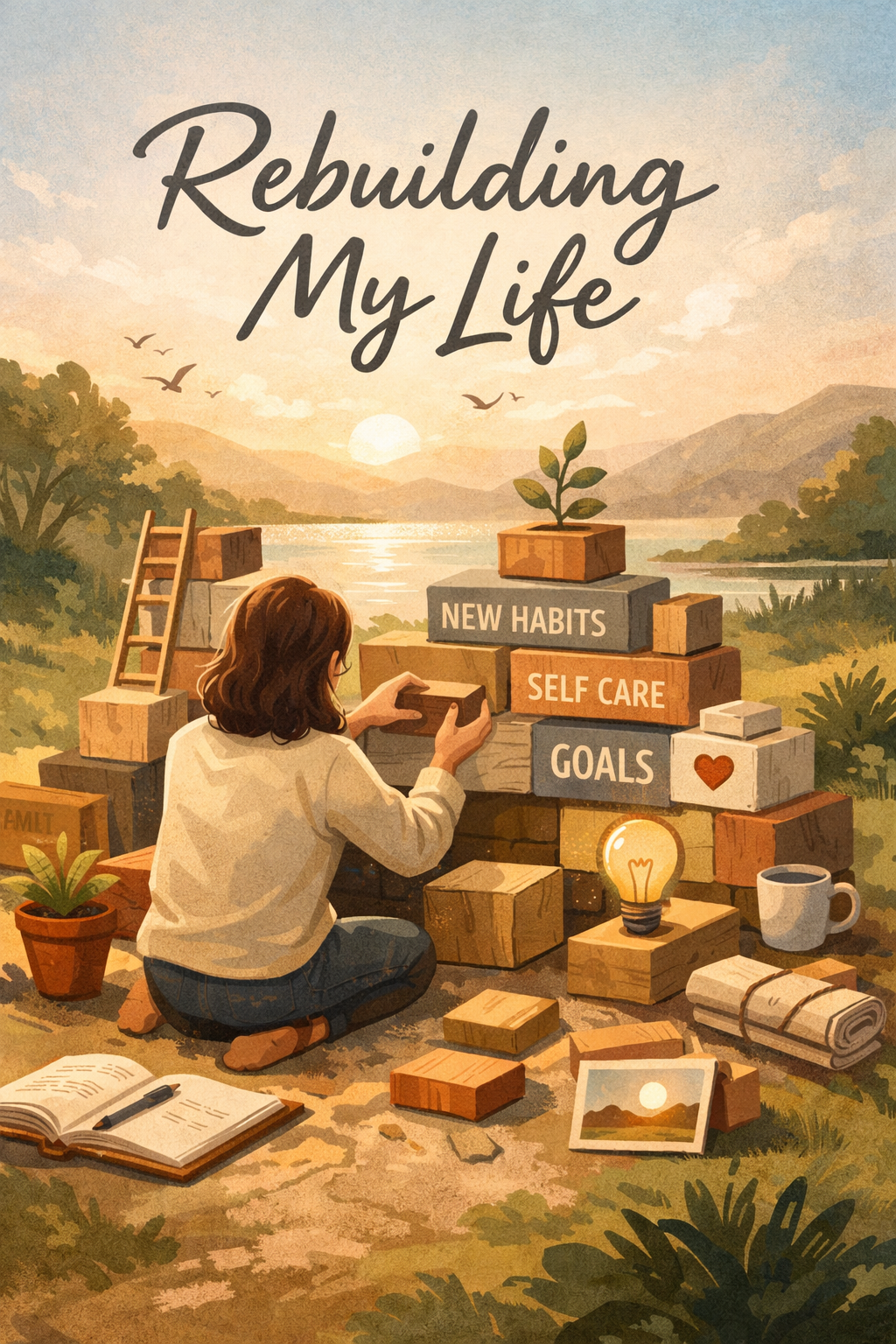
When you finally decide to rebuild your life, the first instinct is often to rush. To fix everything at once. To make up for lost time. To prove — to yourself or someone else — that you’re okay now.
But rebuilding doesn’t respond to pressure. It responds to presence.
You don’t have to rush your way back. You don’t have to sprint toward a version of yourself you’re not ready to be yet. You don’t have to force clarity, confidence, or direction before they naturally return.
Rushing is a trauma response. Rebuilding is a trust response.
Rushing says, “I’m afraid I’ll fall behind.” Rebuilding says, “I’m allowed to move at the pace that keeps me whole.”
When you slow down, you start noticing the things you used to overlook — the small wins, the subtle shifts, the quiet signs that you’re becoming someone steadier than before. You start choosing what actually supports you instead of what simply distracts you. You start building a life that fits, not a life that performs.
There is no timeline for coming back to yourself. There is no deadline for healing what broke you. There is no prize for pretending you’re further along than you are.
Your pace is not a problem. Your pace is your protection.
Takeaway: You don’t rebuild by rushing — you rebuild by returning to yourself, one honest moment at a time.
If you’re learning to move at a pace that actually supports you, give yourself room to slow down and notice what’s shifting. The Journal App offers a calm space to track your progress, reflect on what’s working, and stay connected to the version of you that’s returning. You can also explore the Reflection & Journaling section on Cheerful Road for prompts and practices to help you rebuild with intention rather than rushing out of fear.